

(As of 5 June 2026)
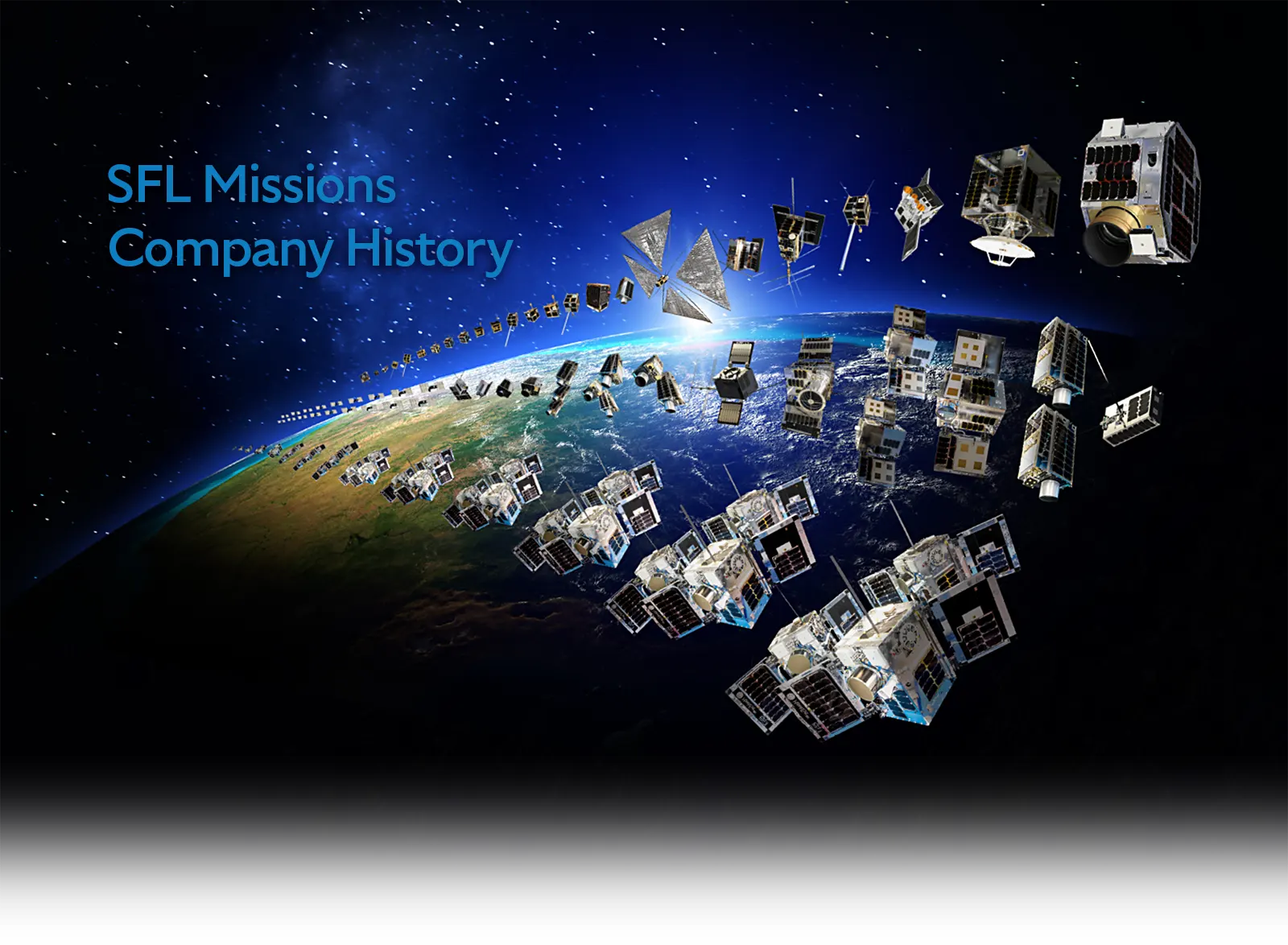
The Space Flight Laboratory (SFL) became a new private company in 2025, SFL Missions Inc., after being housed within the University of Toronto Institute for Aerospace Studies (UTIAS) since 1998. It employs the same engineering team and leverages the same smallsat technologies, facilities, and processes that customers worldwide have come to know and trust for nearly three decades.
Based in Toronto, SFL Missions is an end-to-end provider of small satellite missions that develops low-cost, rapidly deployed nano-, micro-, and smallsat missions from concept through to launch and on-orbit operations. The private company is continuing and expanding the legacy of 98 operationally successful smallsat missions and more than 450 cumulative years in orbit.
As Canada’s small satellite champion, SFL Missions is recognized globally as a leader in researching and developing novel technologies that have pushed boundaries of small spacecraft and changed the world’s perception of what small satellites can accomplish. Included in its technical achievements are advanced attitude control and formation flying capabilities, scalable power systems, onboard computing breakthroughs, and innovative propulsion systems.
As a private company, SFL Missions is poised to fully exploit the agile business model refined over years of rapidly innovating to meet and exceed the mission requirements of customers in the commercial, government, and research sectors. In addition, SFL Missions was among the first to offer a Flex Production Program that gives customers – especially NewSpace clients with budget-aggressive business models – the option of having satellites developed at their own location, a third-party site, or the SFL Missions facility in Toronto.
This unique approach to business and innovation has enabled the company to develop operational satellites for Earth observation, communications, atmospheric monitoring, maritime surveillance, technology demonstration, and space science. Additionally, SFL Missions is continuing the tradition of training the next generation of small satellite aerospace engineers with establishment of the SFL School of Small Satellite Design and its offering of the SFL Apprenticeship Program.
SFL Missions currently has more than 30 spacecraft under development in Toronto or at client facilities under our Flex Production program. Space-proven SFL platforms support missions from 3 to 500 kilograms. All platform classes – THUNDER, SPARTAN, JAEGER, NEMO, DEFIANT, DEFIANT-XL and DAUNTLESS leverage the same core technologies and hence the same on-orbit heritage.
Commenting on the formation of SFL Missions as a private company, Director and CEO Dr. Robert E. Zee said, “The market for small satellite missions has evolved rapidly in recent years, particularly in the NewSpace era. We have created SFL Missions with the right combination of business responsiveness, expertise, and capabilities needed to meet smallsat mission challenges now and far into the future.”
A HERITAGE OF SMALLSAT SUCCESS
The Space Flight Laboratory (SFL) was established in 1998 at the University of Toronto Institute for Aerospace Studies (UTIAS). What SFL has accomplished in the past 27 years is nothing short of remarkable – 98 distinct nano- and micro-class satellites with more than 450 cumulative years of on-orbit operation (as of June 2026). By carefully controlling costs and advancing technology through innovation, SFL removes barriers for government, research and commercial entities to provide valuable services worldwide.
SFL’s long list of accomplishments is even more extraordinary given the fact it was created at UTIAS to build just a single satellite – the Canadian MOST (Microvariability and Oscillations of STars) space telescope. The 57-kilogram MOST satellite, Canada’s first space telescope, was launched in June 2003 and operated successfully for 15 years, despite having been designed for a one-year mission. Featuring ground-breaking attitude control and pointing precision required for space astronomy, the MOST space astronomy satellite has made an overwhelming impact through scientific discoveries related to solar-type stars and exoplanets.
Following the successful launch and operation of MOST in 2003, it became clear that SFL had broken a crucial performance barrier in microsatellite utility. Rather than let the SFL legacy end there, Dr. Robert E. Zee, the UTIAS manager for MOST, now SFL Director, pursued additional challenges and began transforming SFL into the business it is today.
The University of Vienna was the first to fund SFL for an ambitious space astronomy constellation called BRITE (BRIght Target Explorer), and was later joined by the governments of Austria, Poland and Canada. Defence Research and Development Canada (Ottawa) also stepped forward to fund the initial CanX series of nanosatellites, of which two became the first satellites of their size to achieve sub-meter accurate autonomous formation flight.
Over the years, SFL has enjoyed incredible success with a wide variety of missions. Each satellite represents a technological advance in the field by breaking barriers relative to what small satellites can do. Here is a timeline of launches:

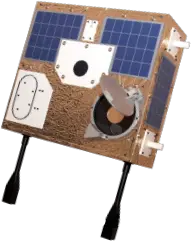
2008
CanX-2, launched in April 2008, is Canada’s smallest operational satellite and the country’s first operational CubeSat – roughly the size of a milk carton. Its technologies push the state of the art in low-power, miniature satellite components. It is also among the smallest scientific satellites in the world to first feature three-axis attitude stabilization.
Nanosatellite Tracking of Ships (NTS), a 6.5-kilogram satellite also known as CanX-6, was launched together with CanX-2 in April 2008 to demonstrate leading-edge ship detection (Automatic Identification System) technology from space for the first time. NTS was developed on an incredibly fast timeline of only six (6) months, a first for a satellite of this class in Canada and perhaps the world. The success of NTS secured COM-DEV a major investment to start a new ship tracking company.
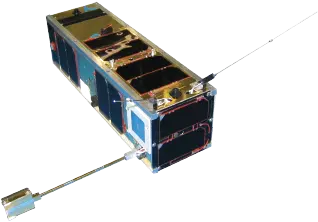
2010
SFL launched a second ship detection satellite, AISSat-1, in July 2010 for the government of Norway, that nation’s first operational satellite. AISSat-1 that operated successfully and exceeded its design lifetimes by a considerable margin.
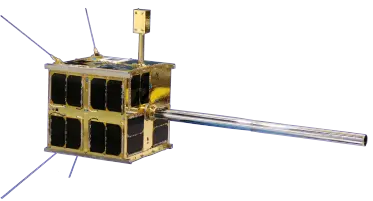
2013-2014
A collection of six space astronomy nanosatellites, the BRITE Constellation, was launched for three countries, Austria, Poland and Canada, each 7-kg satellite with better than 1 arcminute pointing accuracy in 2013 and 2014.
CanX-4&5, launched in 2014, are formation-flying nanosatellites developed by SFL to demonstrate precise, autonomous formation flying. They completed their highly successful mission ahead of schedule and brought low-cost formation technology to the commercial applications market.
Norway’s AISSat-2 ship detection satellite launched and operated long past its design life.
2015
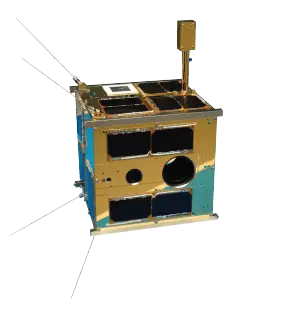
The maritime monitoring nanosatellite EV9 launched with high-performance ground target tracking, a next generation Automatic Identification System (AIS) receiver for high ship-detection rates, and a high-speed downlink transmitter for high data volume transfers.
2016
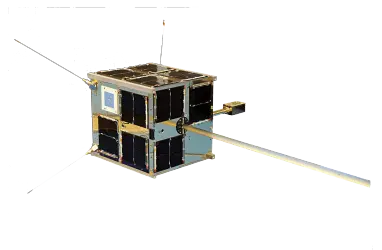
M3MSat launched as a follow-on to NTS. SFL contributed the attitude control system, command and data handling system, and power system to the Canadian Maritime Monitoring and Messaging Microsatellite (M3MSat).
GHGSat-D demonstration microsatellite launched in 2016, becoming the first high-resolution microsatellite designed to measure greenhouse gas emissions from point sources, such as industrial facilities and power plants.
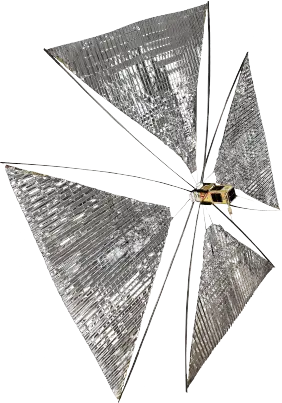
CanX-7 launched. The satellite successfully completed a seven-month aircraft tracking campaign (first in North America) before deploying its drag sails in May 2017 to demonstrate drag-sail based deorbiting. Canada’s first drag sail technology is now space proven and available as means for orbital debris mitigation when needed.
2017
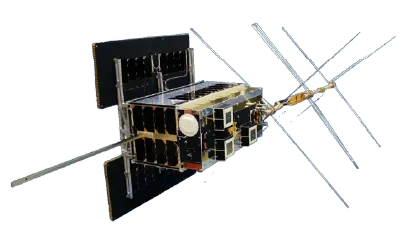
Norway’s scientific satellites NorSat-1 and NorSat-2 were launched. NorSat-1, Norway’s first scientific satellite, carries three payloads: an Automatic Identification Sensor (AIS), a Langmuir Probe, and a Compact Lightweight Absolute Radiometer (CLARA). NorSat-2 carries an AIS and a VHF data exchange payload with a first-of-its-kind deployable Yagi antenna developed by SFL.
SFL developed LEO 2, a Ka-band communications satellite, as a pathfinder for a major commercial communications constellation.
2018
The SFL-developed HawkEye 360 Pathfinder satellites launch, the first three formation-flying microsatellites to collect radio frequency (RF) data for first-of-its-kind RF-based analytics.
2020
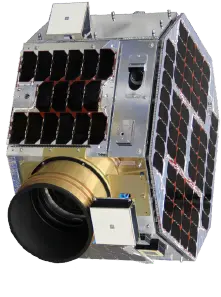
Slovenia’s first satellite, the NEMO High Definition (NEMO-HD) mission for SPACE-SI, a Slovenian Center of Excellence launched. The highly successful NEMO-HD is a 72-kg multispectral imaging and video mission with resolution down to 2.8 m.
GHGSat-C1, the first commercial GHGSat Greenhouse Gas Monitoring Satellite launched, part of a constellation of high-resolution methane sensing microsatellites which each include enabling attitude control technology developed by SFL.
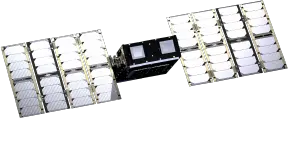
The first of Kepler’s Generation 1 operational satellite constellation for high-performance communication services was launched, developed by SFL in Toronto on our high-performance 6U-XL CubeSat platform. Kepler built an additional 20 satellites under the SFL Flex Production Program, which were launched in the next few years.
2021
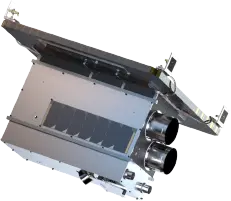
DMSAT-1, the first aerosol and greenhouse gas monitoring microsatellite launched in 2021 for the Dubai Municipality, carries a multispectral polarimeter and a pair of spectrometers.
Norway launched NorSat-3 launches with an AIS and a Navigation Radar Detector (NRD) for non-cooperative ship detection.
GHGSat-C2, the second commercial greenhouse gas monitoring microsatellite, is launched.
2022
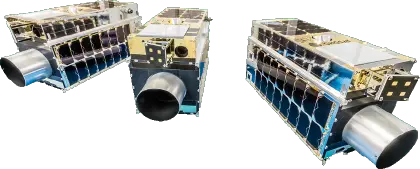
HawkEye 360 Clusters 2 and 3 are launched for commercial operation.
GHGSat-C3, C4, and C5 launched, carrying a new X-Band spacecraft communication system that increases data download speed tenfold.
2023
HawkEye 360 Clusters 4 and 5 launch in April and May.
LEO 3 communications satellite built by SFL for Telesat Canada was launched to maintain continuity in low Earth orbit satellite-based communications tests.
Norway launched NorSat-TD, a European technology demonstration satellite, testing optical data transfer to ground stations.
HawkEye 360 Clusters 6 and 7 launched. Cluster 7 was the first integrated at the HawkEye 360 facility in Virginia under the SFL Flex Production Program.
2024
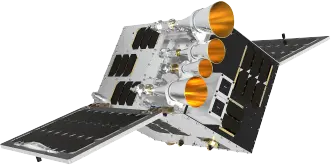
GHGSat-C6, C7, and C8 launched.
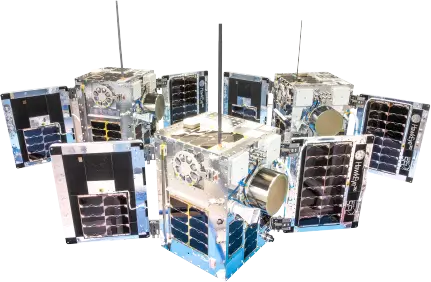
HawkEye 360 launches Clusters 8, 9, 10, 11. SFL fully developed Cluster 9 in Toronto, while HawkEye 360 integrated Clusters 8, 10 and 11 in Virginia.
2025
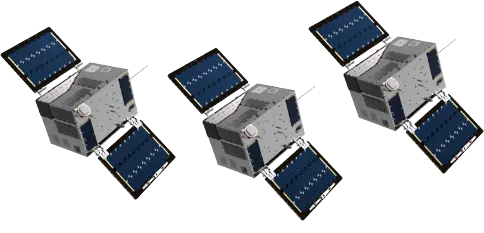
Canada launched the three-satellite Gray Jay constellation as part of its All-Domain Situational Awareness program. Defence Research and Development Canada (DRDC) selected SFL to develop the constellation of three formation-flying satellites to demonstrate advanced surveillance of Canada’s Arctic region from space.
Norway launched NorSat-4 for ship detection, equipped with a low-light imaging camera.
GHGSat-C12 and -C13 launch, bringing to 10 the number of greenhouse gas monitoring satellites developed by SFL.
HawkEye 360 Cluster 12, fully developed by SFL in Toronto with enhanced capabilities, is launched.
2026
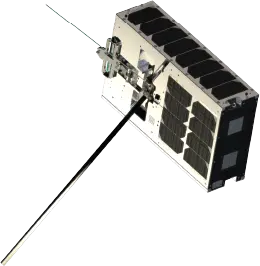
AISSat-4, a ship detection satellite developed on an accelerated schedule by SFL, is launched.
HawkEye 360 Clusters 13 and 14 launch in January and March after integration in Virginia under Flex Production.
More than 30 new small satellites are under development at the SFL facility in Canada or at client locations.